
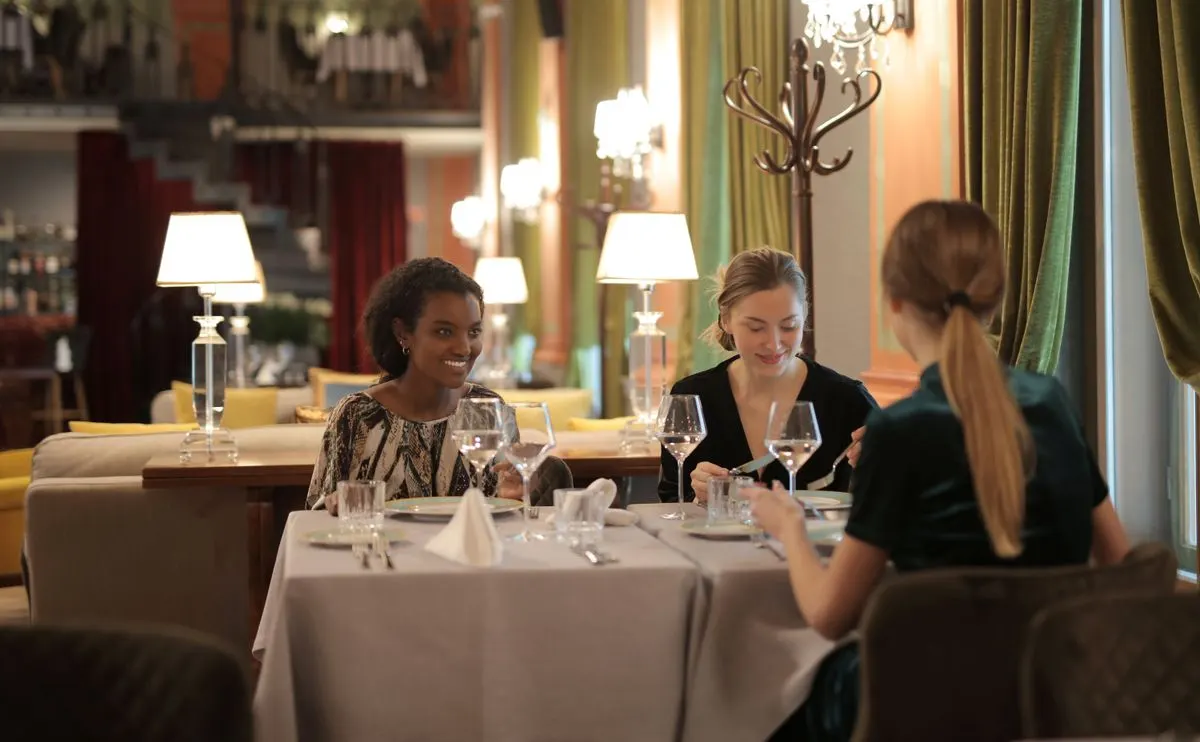
It's 6:45 on a Friday night. Every table is full. There's a line at the host stand, two servers are waiting on the kitchen, and the manager is comping a dessert at table twelve.
The phone at the host stand rings. It rings again. Nobody can get to it.
On the other end is someone who wanted a table for four at 7:30. They don't leave a voicemail. They hang up, call the next restaurant on their list, get a "yes, we can do 7:30," and have dinner there.
You never hear about it. Nothing in your system records that a table for four just walked out the door before it walked in.
That's the problem with missed calls. The cost is real, but it doesn't show up anywhere you'd normally look. This post gives you the numbers the research supports, explains why the loss is so easy to miss, and walks you through finding your own number, which is the only one that matters for your restaurant.
What the research actually says
Plenty of figures about missed calls get passed around online. Most of them can't be traced to a source. Here are the three we can stand behind, along with what each one does and doesn't tell you.
$20 billion a year, across the industry (QSR Magazine derivation)
QSR Magazine estimates that US restaurants lose around $20 billion a year to missed calls. This is a derivation: the figure was worked out from industry call volumes and average order values. It is not a measured total, and it is not a claim about any single restaurant.
What it tells you: across the industry, missed calls add up to real money.
What it doesn't tell you: how much you are losing.
Around 150 missed calls a month (also a QSR Magazine derivation)
The same QSR Magazine analysis works out to roughly 150 missed calls a month for a typical restaurant. This is also a derivation, not a count anyone took from phone logs. Your restaurant could miss far fewer or far more, depending on your volume, your staffing, and how busy your rush gets.
Treat it as a reason to check, not as your number.
78% abandon, 82% call a competitor (CallRail, 2025)
CallRail's 2025 caller research found that 78% of callers abandoned a business after an unanswered call, and 82% would call a competitor instead.
This is the part that matters most for restaurants. A diner who wants a table tonight or dinner in the next 30 minutes has options. If you don't pick up, the research says most of them won't wait around for you. They'll dial the next place.
That's the whole research picture. One industry estimate, one typical-restaurant estimate, and one piece of caller research. Everything else in this post is arithmetic you can do with your own numbers.
Why the loss is invisible
Go back to that Friday night.
The caller who wanted 7:30 never shows up in your reservation book, because they never got a reservation. They don't show up in your POS, because they never ordered. They don't show up as a complaint, because they never spoke to anyone.
Meanwhile, at 7:30, a table for four opens up. It sits empty for twenty minutes. Then a walk-in party arrives and the host seats them. The table turned, the night was busy, and the numbers look fine.
Nobody connects the two events. Why would they? From inside the restaurant, a missed call looks exactly like a normal day.
That's what makes this loss so stubborn. A burned steak gets sent back. A slow server gets a bad review. A missed call just quietly goes somewhere else, and the night carries on as if nothing happened.
The empty twenty minutes, the walk-in you would have seated anyway, the takeout order that went to the pizza place down the street: none of it gets written down. If you want to know what missed calls cost you, you have to go looking.
Your number is the only one that matters
Industry totals are useful for context. They don't pay your rent. What you need is your own figure, and you can get a solid estimate in about an hour with four steps.
Step 1: Count your unanswered calls in one busy week
Pull your phone logs for one normal busy week. Not a holiday week, not a slow week. A regular week with a regular Friday and Saturday rush.
Count every call that wasn't answered. Be thorough, because some phone systems hide part of the picture:
- Busy-signal calls. If your line was tied up, a second caller may have heard a busy signal. Some logs don't record these at all.
- Abandoned calls. A caller who hung up after two rings, or while on hold, may not show up as "missed."
- Calls to a second line. If you have more than one number, check them all.
If your log looks low, ask your phone provider what it records. A clean-looking log can still be hiding calls.
Step 2: Multiply by 4.3 for a monthly figure
A month is roughly 4.3 weeks. Multiply your weekly count by 4.3 to get a monthly figure.
Step 3: Multiply by your average order value
Use your real average ticket. For dine-in, that's your average check per table. For takeout, it's your average takeout order. If your calls are a mix, use a blended figure or run the math twice.
Step 4: Multiply by the share you believe would have ordered
Not every missed call was a sale. Some callers wanted your hours. Some were vendors. Some were wrong numbers.
Be honest here. If you think half your missed calls were people trying to order or book, use 50%. If you think it's a third, use a third. You know your callers better than any study does.
A worked example (round numbers, not a statistic)
Here's how the math works with simple round numbers. This is an example to show the method, not a figure from any research.
Say your restaurant misses 4 calls a day. That's 28 a week. Multiply by 4.3 and you get about 120 missed calls a month.
Say half of those callers would have ordered or booked. That's 60 lost orders.
Say your average ticket is $45.
60 orders × $45 = $2,700 a month.
That's one restaurant, four calls a day, with conservative assumptions. Your numbers may be higher or lower. The point is that a few missed calls a day adds up faster than most owners expect.
If you'd rather not do it by hand, plug your own numbers into our ROI calculator.
What one missed call really costs
The worked example counts one order per missed call. In a restaurant, a single call is often worth more than that.
The table
A reservation call is rarely for one person. The 7:30 caller wanted a table for four. That's four entrees, maybe appetizers, drinks, and dessert. When that call goes unanswered, you don't lose one order. You lose a whole table's check.
The takeout order
Takeout calls cluster around the same hours as your dine-in rush, which is exactly when nobody can get to the phone. A family ordering dinner for five on a Thursday doesn't want to wait. If your line rings out, they're on the phone with the next place before your host is back at the stand.
The regular who never comes back
This one doesn't show up in the math at all. A regular calls, can't get through, and orders somewhere else. The food is fine. Next week, they call that other place first.
You didn't lose one order. You lost a habit. And you'll never know which missed call it was.
The planner calling days ahead
Not every call is about tonight. Someone planning a birthday dinner for twelve calls on a Tuesday afternoon to book for Saturday. Your kitchen is in prep, the manager is on a supplier call, and the phone rings out.
That caller is planning, and planners have lists. When you don't answer, they move to the next name. A big-party booking, made days ahead, can be worth more than a whole night of walk-ins. It's also exactly the kind of call that slips away while everyone is busy getting ready for service.
What fixes it
The fix is simple to describe: someone answers every call, every time.
For most restaurants, that can't be the host. During the rush, your host is seating guests, managing the waitlist, and handling the door. Asking them to also take a ten-minute takeout order with three modifications is how calls get missed in the first place.
A live answering team fixes this by doing three things.
It answers every line during the rush. When your staff can't pick up, a trained live agent does. The caller hears a real person, not a ring tone or a recording.
It takes orders and reservations on the call. The agent doesn't just take a message and promise a callback. They complete the takeout order or book the table while the caller is still on the line. The caller hangs up with dinner sorted, which is the whole point.
It texts back the ones that still slip through. Even with full coverage, a call can drop or a caller can hang up early. Missed-call text-back sends a quick text so the caller has a reason to come back to you instead of dialing the next place.
After every call, you get a short summary, so you know exactly who called and what they wanted.
Overflow, after-hours, or full cover
Restaurants usually set this up one of three ways:
- Overflow. Your staff answers first. When they can't get to the phone, calls roll over to live agents. Good for restaurants that only struggle during the rush.
- After-hours. Agents answer when you're closed, taking reservations and answering questions for the next day. Good for catching the planners who call late at night.
- Full cover. Agents answer every call, all day. Good for restaurants that want the phone off the host stand entirely.
You can start with one and change later as you see where your calls are coming from.
Voicemail vs AI bot vs live agents
Here's how the three most common options handle the same Friday night caller.
| Option | What happens to the 7:30pm caller | What you learn | Pricing |
|---|---|---|---|
| Voicemail | Hears a recording. Most hang up and call somewhere else. If they do leave a message, someone has to call back before 7:30. | Only what's in the messages that were left. Callers who hung up are invisible. | Varies by phone provider |
| AI voice bot | Talks to a script. Simple requests may go through; changes like a late arrival, a high chair, or a big party can stall the call. | Whatever the bot captured, in the format the bot captured it. | Varies by provider |
| Answer4U live agents | Talks to a trained person who books the table for four at 7:30 on the call. | A short summary after every call: who called, what they wanted, what was booked or ordered. | From $5/hour |
Answer4U uses live human agents only. No AI, no bots. Answer4U is based in Maryland, and our team is trained for restaurants, hotels, clinics, and dental practices.
Pricing
Answer4U plans start at a minimum of $5/hour.
There's no long contract, and setup takes days, not weeks.
Your exact price depends on how you want coverage set up (overflow, after-hours, or full cover) and when you need it. The quickest way to get a real number is a short demo call. We'll ask about your hours and your rush, and give you an exact quote.
See plan details on our pricing page.
Get your exact quote on a short demo call.
Run your own missed-call numbers in the ROI calculator.
If your own math comes out anywhere near the worked example above, compare that monthly figure to what coverage would cost for your busiest hours. That's the decision in one line.