
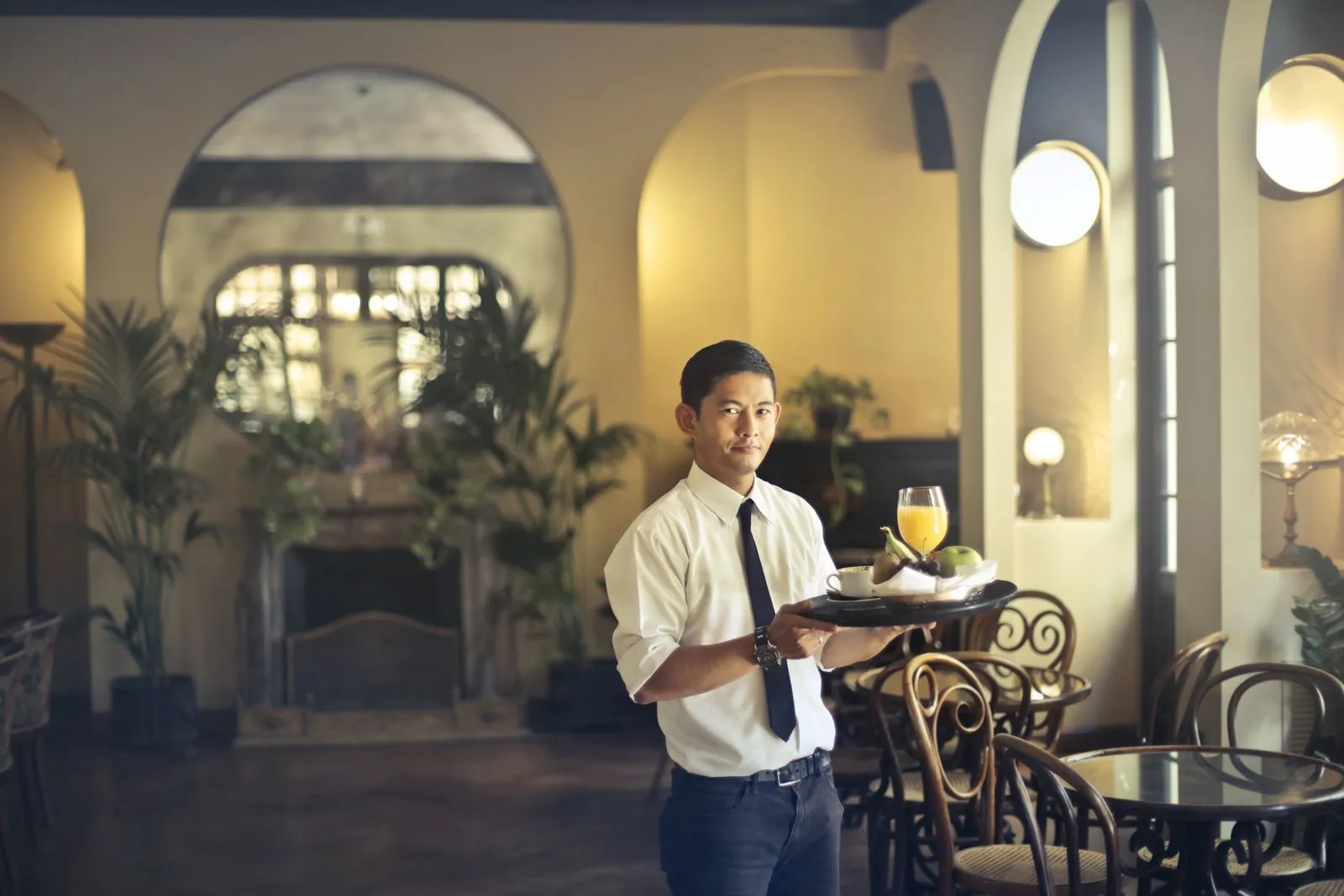
It's 7:15 on a Friday night in Baltimore. Every table is full. A party of six is standing at the host stand asking how long the wait is. Two servers are running plates, and the kitchen just called for help on the line.
Then the phone rings.
The host looks at it, looks at the six people in front of her, and goes back to seating guests. The phone rings four more times and stops. Ninety seconds later it rings again. Maybe the same caller, maybe someone new. Nobody can tell, because nobody had a free hand.
Every Maryland restaurant owner knows this scene. Your busiest hour for diners in the room is also your busiest hour on the phone. When the phone gets ignored during a rush, money walks out the door without ever coming in.
This guide covers why the phone fails at peak hours, what those missed calls cost, and how overflow call cover keeps your line answered without adding staff to the floor.
Why peak hours are when the phone fails
Phone calls don't spread out evenly through the day. They bunch up, and they bunch up at the worst possible times.
People call for takeout when they're getting hungry. That's the same time everyone else is getting hungry and heading out to eat. People call to book a table when they're making dinner plans, which tends to be right before dinner or on the weekend evenings when they're already thinking about going out.
So the takeout orders and reservation calls land right on top of your dine-in rush. The phone gets busiest at the moment your staff are least able to pick it up.
The host stand is already full
At most restaurants, the host or front-of-house lead owns the phone. During a rush, that same person is:
- Greeting and seating walk-ins
- Managing the waitlist
- Handling guests who want a different table
- Settling questions about wait times
- Handing off takeout bags that are ready
Asking them to also take a phone order means asking a guest standing right in front of them to wait. Most hosts will choose the person in the room every time, and they're right to. But the caller loses out.
The kitchen is in the weeds
When the host can't get to the phone, sometimes a manager or a cook grabs it. That works on a slow Tuesday. On a Friday at 7pm, pulling someone off the line to write down a takeout order slows every ticket in the kitchen.
A phone order isn't a quick call
A reservation might take two minutes. A takeout order for a family can easily become a ten-minute call. The caller wants to know what's in the special. They want the sauce on the side. They're asking someone in the background what they want. They need the total and a pickup time.
Nobody on a rush-hour floor has ten free minutes. So the phone rings out, or someone answers with "Can you hold?" and the caller sits listening to kitchen noise until they give up.
Friday and Saturday hit hardest
Weeknight lunch rushes squeeze the phone too, but Friday and Saturday nights are when the gap is widest. You've got the fullest dining room of the week, the longest waitlist, and the most people at home deciding to order in or book a table for tomorrow. If you only fix the phone for two nights a week, those are the two nights to fix.
What a missed peak-hour call costs
A missed call doesn't look like a loss. There's no empty table, no returned plate. It just quietly doesn't happen. That makes it easy to ignore.
But callers don't wait around. According to CallRail research from 2025, 78% of callers abandoned a business after an unanswered call, and 82% said they would call a competitor instead.
Put that in restaurant terms. A caller who gets no answer at your place doesn't usually try again in twenty minutes. They scroll to the next restaurant in their search results and order from them. In a city like Baltimore, the next option is often a few blocks away.
A simple example
Here's a worked example using round numbers. It's not a statistic about Maryland restaurants, just arithmetic to show how fast this adds up.
Say your restaurant misses 4 calls a day during the rush. Say half of those callers would have placed an order. And say your average ticket is $45.
4 missed calls × half = 2 lost orders a day
2 orders × $45 = $90 a day
$90 × 30 days = $2,700 a month
Your numbers might be higher or lower. Plug in your own call count and your own average ticket. Most owners are surprised by the result.
Not every missed call is the same size
The example above treats each call as one average order. In practice, some calls are worth a lot more.
The table for four. Someone calls at 6:45 to ask if you can seat four people at 8. If nobody answers, they book somewhere else. That's not one entree, it's four, plus drinks, plus dessert.
The takeout order for five. A parent calls to order dinner for the whole family. That's a big ticket on a single call, and it's exactly the kind of call that takes ten minutes your staff don't have.
The planner booking days ahead. Someone is organizing a birthday dinner or a work outing for next weekend. They call on Friday night because that's when they finally have time to make the plan. If they can't get through, they book that whole party with a restaurant that picked up. You lose a large table on a future night, and you never knew the call came in.
Then there's what doesn't show up on a receipt. A caller who couldn't get through once may not try you again next time. That's the part of the cost that's hardest to count and easiest to underestimate.
How overflow cover works
Overflow cover is a simple idea: your staff still answer the phone first. When they can't, a live agent does.
You aren't handing your phones to someone else full time. You're adding a backup that kicks in only when the line is busy or the phone rings out. On a slow afternoon, your team handles every call like they always have. During the Friday rush, the calls your host can't reach go to a trained person instead of into the void.
Step 1: Your staff answer first
Nothing changes about how your restaurant picks up the phone. If your host is free, they answer. Regulars who like talking to your team still get your team.
Step 2: Busy or unanswered calls roll over
If the line is busy, or the phone rings a set number of times with no answer, the call rolls over to an Answer4U agent. The caller doesn't hit voicemail. They hear a real person, answering in your restaurant's name.
Answer4U uses live human agents only. No AI, no bots, no phone menu asking callers to press 2. Answer4U is based in Maryland, and our agents are trained to handle restaurant calls, along with hotels, clinics and dental practices.
Step 3: The agent takes the order or books the table
This is the part that matters most. The agent doesn't just take a message and promise a callback. They complete the takeout order or the reservation on the call.
For takeout, that means walking through the order with the caller, noting any changes, and confirming the details. For reservations, it means getting the name, party size, date and time, and any special requests.
The caller hangs up with their order placed or their table booked. That's the same result as if your host had picked up.
Step 4: Text-back catches the ones that still slip through
Even with overflow cover, a caller sometimes hangs up before anyone can answer. Maybe they called during a two-second gap, or gave up after one ring.
Missed-call text-back is built for those moments. When a call is missed, the caller gets a text message from your restaurant so the conversation doesn't just end. Instead of scrolling to a competitor, they have a reason to come back to you.
Step 5: A summary after every call
After each call the agent handles, you get a short summary: who called, what they wanted, and what was done. An order taken, a table booked, a question answered.
That means nothing gets lost between the agent and your restaurant. And the next morning, you or your manager can read through the night's summaries in a few minutes. You'll see exactly how many calls came in during the rush, what people asked for, and which ones would have been missed without cover.
For a lot of owners, that morning summary is the first time they've had a clear picture of what their phone actually does on a busy night.
Staff-only phones vs voicemail vs overflow cover
Here's how the three most common setups handle the same Friday night.
| Friday 7pm caller | Takeout order | What you learn | Pricing | |
|---|---|---|---|---|
| Staff-only phones | Rings out or gets put on hold while the host seats guests | Taken only if someone can step away for several minutes | Nothing about the calls nobody answered | Your staff's time, pulled away from guests in the room |
| Voicemail | Hears a recording; many hang up without leaving a message | Not taken; you'd have to call back after the rush, when they've likely ordered elsewhere | Only what callers choose to leave on a message | No added cost |
| Answer4U overflow cover | Your staff answer first; if they can't, a live agent picks up | Completed by the agent on the call | A short summary of every call the agent handles | From $5/hour |
The difference isn't just whether the phone gets answered. It's whether the caller gets what they called for before they hang up.
Baltimore and beyond
Baltimore is Maryland's largest city and the center of its restaurant scene, so it's where peak-hour phone pressure shows up first. But the same Friday-night problem hits restaurants all across the state.
Baltimore city restaurants. Neighborhood spots, busy downtown dining rooms, and places that do as much takeout as dine-in all deal with the same squeeze: a full room and a ringing phone at the same time.
The suburbs. Suburban restaurants often lean even more on phone orders, with families calling in dinner for pickup on the way home. That puts a heavy load on the phone during the after-work rush.
Statewide. Wherever your restaurant is in Maryland, your callers are dialing from 410, 443 and 667 area codes, and your lunch and dinner rushes all run on Eastern Time. Answer4U's team works on the same clock you do, so overflow cover lines up with your actual busy hours, not someone else's time zone.
It's one Maryland-based team and the same service across the state. A restaurant in Baltimore and a restaurant elsewhere in Maryland get the same live agents, the same order-taking on the call, the same text-back and the same call summaries.
See more about coverage on our Maryland locations page and our Baltimore page.
Pricing
Answer4U plans start at a minimum of $5/hour.
There's no long contract. You choose the hours you want covered. That might be Friday and Saturday dinner only, lunch and dinner every day, or round-the-clock cover. Many restaurants start with their two busiest nights and add hours once they see the call summaries.
Your exact price depends on the hours and the call volume you need covered. The fastest way to get a real number is a short demo call. We'll ask about your rush hours and how your phones work today, then give you an exact quote.
Setup takes days, not weeks. You don't need to change your phone number or retrain your staff. Your team keeps answering first, and the agents step in when they can't.