
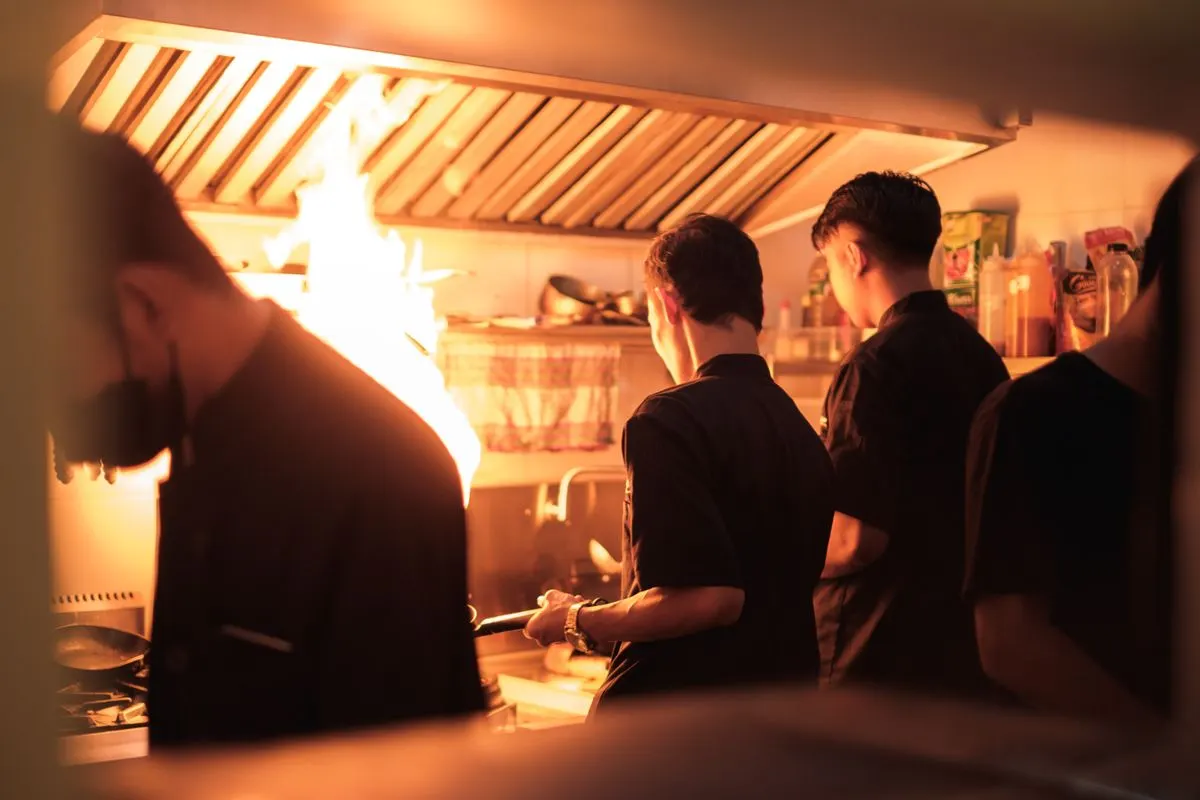
Every owner knows the shape of the problem. Orders cluster into the same ninety minutes as seatings, the host is the only person near the phone, and each call is a choice between the guest on the line and the guests already in the room. Our companion piece explains why restaurant staff can't answer and serve at once; this one is the operating playbook for the calls themselves.
Before the rush: set up an order station
Phone orders fall apart when the call-taker is hunting for information. Put everything within arm's reach of whoever takes orders:
- A printed order sheet (or POS quick screen) with your best-selling items, modifiers, and prices — so no one is shouting questions across the pass mid-service.
- A fixed order format: name, callback number, pickup or delivery, items with modifiers, allergies, total, quoted time. Same order, every call, no exceptions.
- Today's exceptions: 86'd items, changed hours, delivery-area limits — written at the station before service starts, not discovered mid-call.
Ten minutes of setup before the rush removes most of the fumbling during it.
During the call: answer fast, capture once, read back
Answer within a few rings. Every extra ring is a hang-up risk, and a hung-up caller rarely tries again — a typical restaurant misses around 150 calls a month (a derivation from QSR Magazine's industry analysis), and most of them are lost in exactly these rush windows.
Take the order in the fixed format. Callback number early, not last — if the line drops or the kitchen has a question, you can reach the customer. Ask about allergies once, clearly, and write it where the kitchen will see it.
Read the whole order back, with the total and the time. The read-back is where wrong toppings, missing sides, and wrong addresses get caught — while the customer is still on the line to fix them, not at the counter twenty minutes later. Quote a ready time you can beat rather than one that sounds good; a pickup that is ready two minutes early builds trust, one that is fifteen minutes late burns it.
Getting the order to the kitchen: one relay, no games of telephone
Decide in advance how phone orders enter the kitchen — entered into the POS by the call-taker, or passed on a written ticket to one named person. What does not work is a shouted summary across a loud kitchen. Whichever relay you choose, the ticket should carry the callback number, so a sold-out item becomes a thirty-second call instead of a disappointed customer at pickup. If you want to see what the missed ones are costing you first, the counting method on our page about how many calls restaurants miss takes one week of phone logs.
The second line: decide your overflow rules now
Peak hour means more than one line ringing. Set the rules before service, not during it:
- Never let a line ring out. A caller who reaches a busy signal or endless ringing assumes you are closed or overwhelmed; published research found 82% of callers would call a competitor after an unanswered call (CallRail, 2025, as reported by oncrew.ai).
- Hold with honesty. If a caller must wait, say so with a real estimate — "about two minutes" — and get back when you promised. A short, honest hold keeps the order; a silent one loses it.
- Know your cut-off rules. When the kitchen is genuinely at capacity, it is better to quote a longer time or pause phone orders clearly than to accept orders you will serve badly.
After the rush: five minutes with the call log
Once a week, look at when calls were missed — your phone system already records it. Misses that cluster in the same thirty minutes every Friday are a coverage problem with a known shape, and a known shape is something you can fix deliberately instead of hoping next week is quieter.
Where Answer4U fits
Everything above works — if you have a person whose only job during the rush is the phone. Most restaurants don't, and cannot justify one for a two-hour window. That is the exact gap Answer4U fills: trained human agents answer your lines during peak hours (and after them), take orders using your menu, your format, and your read-back rules, and relay them to your kitchen the way you specified during setup. Your team serves the room; no line rings out. See how it works on our restaurant answering service page.
Book a demo and hear an order taken during a simulated rush — then judge the read-back for yourself.